Nuffnang Ad

Saturday, June 13, 2009

Day 1: Samgupsal (BBQ Pork) Dinner at Namdaemun

Namdaemun market is not unlike our Petaling Street or Hong Kong Women's market or even Temple Street. It becomes even more livelier after 5pm when vendors push their carts in a single file to setup shop right in the middle of the street.

It's quite a sight to behold when you see a long line of them quietly entering at the same time without any grand announcement.

Just like the markets at home, you can also find practically anything & everything here. However, Namdaemun is a market of a grander scale. With 6 entrance gates, it's definitely more extensive than the rest.


From the map it looks pretty oragnised, but in reality, when you're down there in the streets, rubbing shoulders with the crowd, & getting tai-chi'd by the aunties, it's pretty easy to lose your direction. But the good thing about tourist places in Seoul is that there will always be a few information booths around with helpful English speaking staff & lots of maps.

We spent the later half the afternoon surveying the site, marking down our targets - Korean souvenirs, Korean ginseng & Korean kitchen utensils. And as evening arrives, our priorities changed to food.

Again, unlike the time when we were in Hong Kong, we didn't have any particular food guide with us this time. So when that happens, it was more like 1) deciding WHAT to eat, 2) look for a place with that SOMETHING that we'd want, 3) surveying which stall had more customers & 4) scrutinising the menu & prices.

This place was located at an alley on the right as you're walking from Namdaemun Gate 6. There were a few BBQ shops here but of course we ended up at the one which seemed to have more customers. But actually we realised later that all of them were full.

The tables here were from a makeshift oil barrel, with a flat circular piece wielded onto the top. They had holes in the middle for the pots (which carries the charcoal) with the bulgogi plates sitting on top.

See hole? No hole! Sheer ingenuity.

And as with any Korean meal, it came with many side dishes, refillable & bottomless.

However we haven't tried pushing the limit before & do not intend to. If you really like something, you can afely ask for more.

This was the Chinese lady who served us. At 9,000 won per person (minimum set), we had BBQ pork wrapped in fresh lettuce leaves & finished up with a bowl of complimentary seafood soup.

The bill for everything came out to be 19,000 won (RM55). Absolutely satisfying!


Friday, June 12, 2009

Day 1: Getting to Know Seoul

It takes a while to get to know a city. You've got to in the heart of it, doing what the locals do, travel the way they travel, & eating what they eat. I was also going to add and speak the language that they speak but that was quite an impossible task for us. Besides, we found out that there was another option for us - Mandarin!


No. 1 : The Subway
Seoul is so well covered with the subway system & that has got to be the best way to travel. No traffic, no jam. subway maps & names of places are in 3 languages: Korean, Mandarin & English. Wait, that is not the best part. The best part is that they're cheap. Most of our trips cost us about 1000 won (RM3).

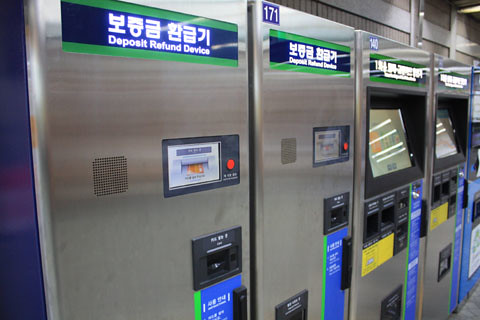
Tickets can be purchased at vending machines in English.
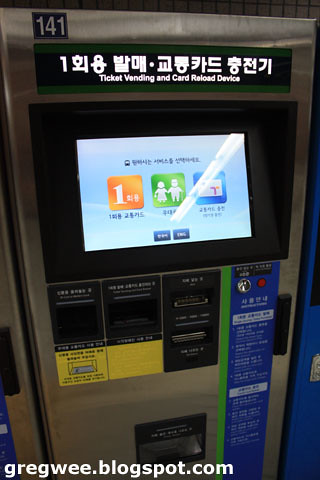

Every ticket that you buy has an additional 500 won (RM1.50) added to it. Upon arival at your destination, you can return the ticket in another machine to get your 500 won back.


We were looking for something like an Octopus or an Oyster card but the closest thing to that was only the T-money card, which was the furthest from those.
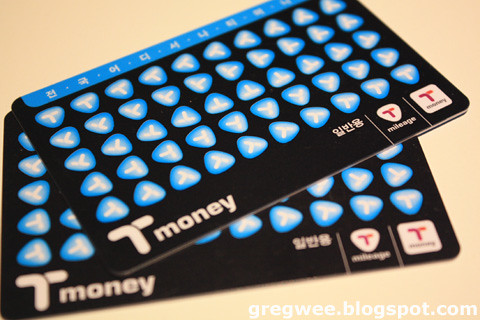

The T-money is quite useless if you're there for only a few days like us. You see, you need to pay 2500 won (non-refundable) for he card, & then, you need to add in money for the trips. The 2500 won is just for buying the card. You'd get about 10% off every trip that you make, but to get your money's worth, you'd probably need to travel like 25 times.


No. 2: The People

We had a theory. We observed that we could actually draw a generational line at 45 years old. Anybody above that age would seem to be aloof & pushy (as in physically).
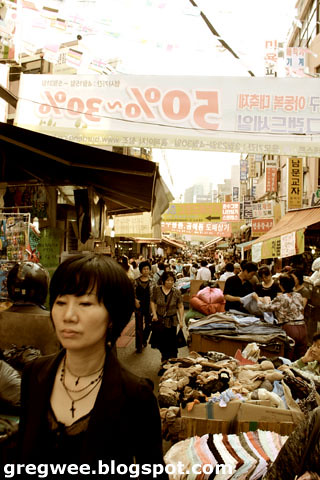

1. Don't be surprised if an auntie suddenly pushes you aside at the counter, with a sweeping motion of her arm, even though the cashier has not given you back your change yet.


2. Don't be surprised when you get pushed aside when you're in the middle of flipping through some bargains. They will slide in from behind or the side.


3. Don't be surprised if they squeeze thenselves through your armpits as you're stuffing your bags into the airplane luggage cabin overhead just before you take a seat.


4. Don't be surprised if an arm or a knee or a foot accidentally hits you, & you turn around to see a stone-cold face, & they just walk past you like you don't exist.


This is Korea. And after a couple of days, we really got used to it. In fact, we started doing what they did. And it felt good. And nobody complained. It's strange I know, but it's acceptable.


Other than that, everyone was generally friendly & helpful. Most of the older ones do not speak English. The younger ones probably does. However, I would say you'd have a better chance with either Japanese or Mandarin with the older folks.


No. 3: The Road Signs
They almost do not exist. Major streets have signages but most smaller lanes do not. In general, knowing the landmarks would be much more practical.


And with that, we were finally in Seoul!

Wednesday, June 10, 2009

Day 1: Korean Traditional Porridge at Myeongdong

Ok, it's about time we post about Korean food.

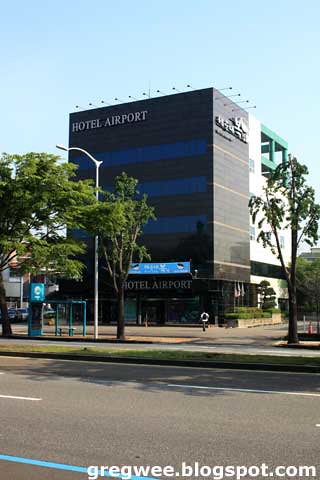
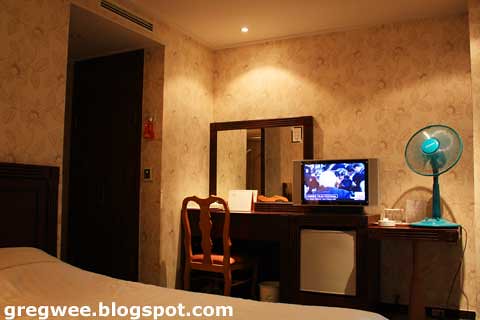
After one whole morning of catching up with sleep at Gimpo Hotel Airport, we were fully charged to 5 bars, revving to go, with our stomachs at empty tank, & our mouths wide open. This is our very first real day in Seoul. FEED US!

We weren't really sure which were the good restaurants but we knew that there were supposed to be lots of food in Myeongdong. And we felt like porridge, sort of like to cleanse off the constipated airline food in our system.

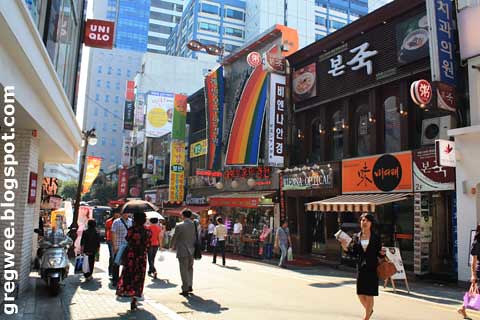
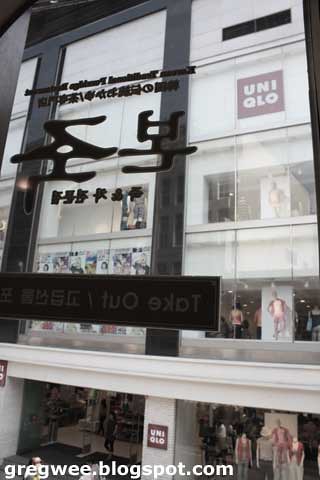
In the maze-like confusion of Myeongdong street, we actually had to circle a few rounds before spotting the porridge word in Mandarin, right above our heads. If you're coming out of Myeongdong subway, you'll be at the main road. The restaurant is at the first inner street, parallel with the main road (see how confusing it is?) If all fails, just look for UNIQLO. The porridge is just opposite from there.

If you can read the name of the place, tell us - it's inverted in the photos.
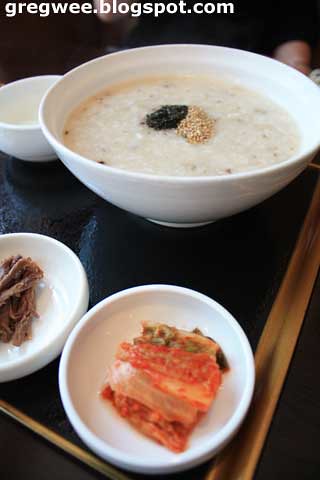
You'd need to walk up the stairs to this nice little cosy restaurant that serves all sorts of Korean porridge - abalone, chicken ginseng, red bean, beef & pine nut. Compared to that, we Malaysians only know 2 types - Teochew style (porridge with separated rice & water) & Hong Kong Cantonese style (really sticky, almost like puree). This is the porridge of the third kind.

Korean style - very sticky but with the grains still whole. Extremely different texture. Extremely nice. There's something about Korean short, stubby & fat rice grain.
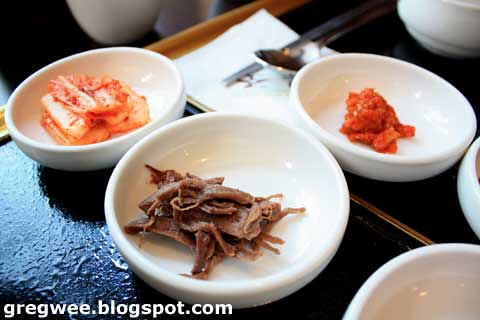
For 2 hungry travellers, this has got to be the most refrshing meal ever. The porridge came out piping hot with the Korean side dishes. Porridge with Kimchi, now that's an idea!


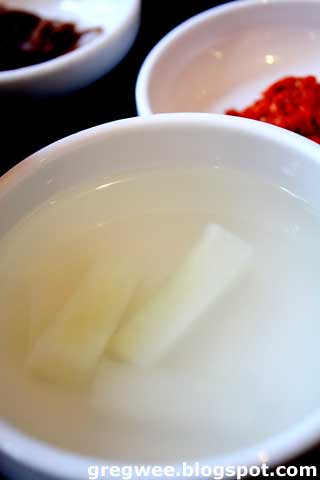
And we found out later that Korean's unsually serve cold soup with hot porridge. It's sort of like a pair that goes together in cooling the body down.


We ordered the Abalone porridge. Abalone pieces small as compared to the Jeju ones but that is another story. Still yum nonetheless!


Chicken and ginseng porridge. Korean eating ginseng is part of their meals unlike Chinese which treat it like a rejuvenating herbal 'medicine'.

The whole thing cost us 18,000 won (RM50) which was pretty normal for a standard Korean restaurant meal.

Nuffnang Ad